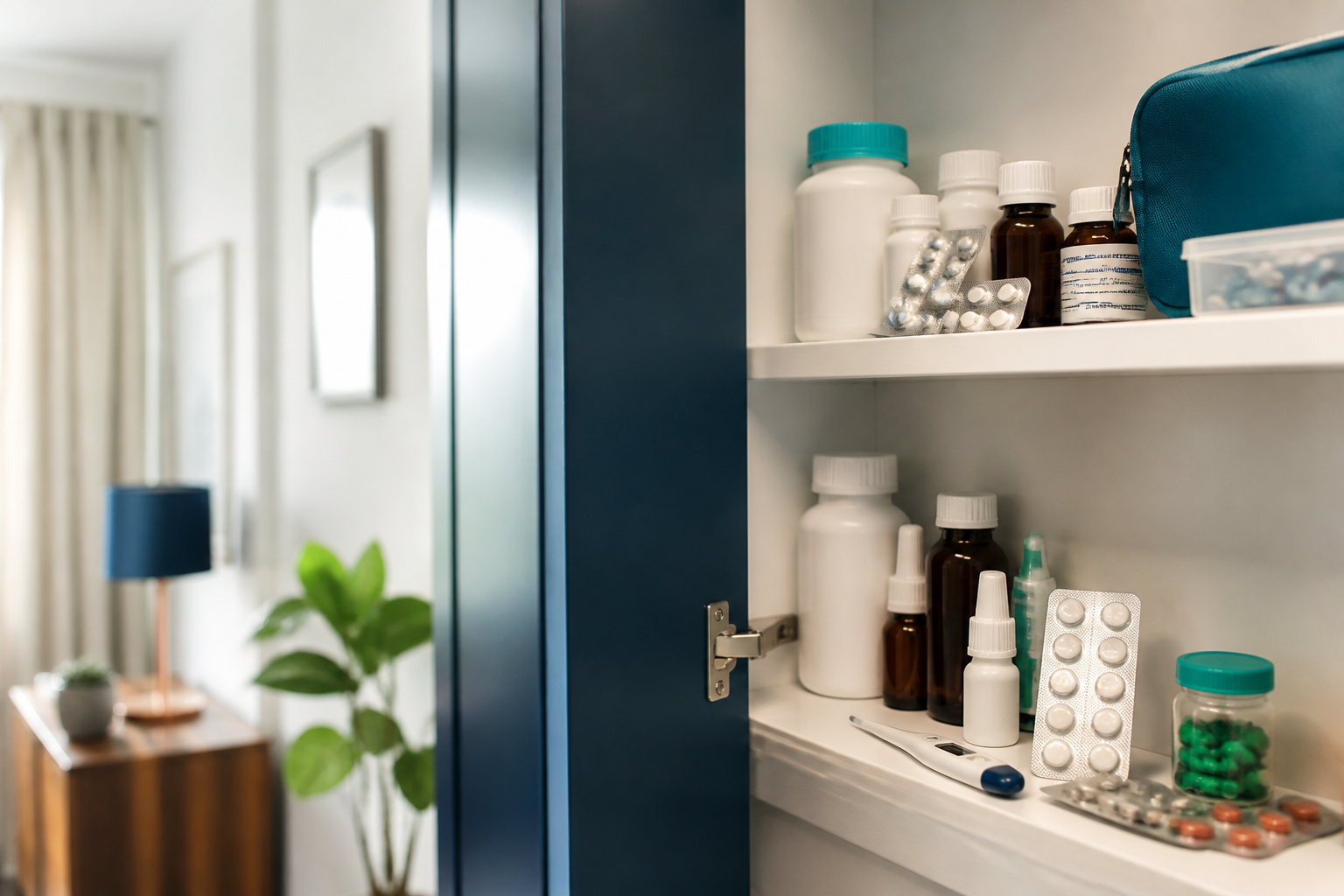
How to Store Medicines at Home Safely in Indian Climates
Heat, humidity, and monsoon moisture can weaken medicines long before the expiry date. Here is how to protect them.
Most of us store medicines wherever there is space — a kitchen shelf, the bathroom cabinet, a drawer in the bedroom, or a small pouch at the back of the fridge. But Indian homes face a specific storage challenge that many other countries do not: extreme heat in summer, high humidity during the monsoon, and often no climate control in the rooms where medicines are kept. This combination can silently degrade medicines long before their printed expiry date, reducing effectiveness or, in some cases, making them unsafe to use.
This guide explains exactly how heat, humidity, and light affect common medicines, the biggest storage mistakes made in Indian households, and simple changes that keep your family's medicine cabinet both effective and safe — especially with children around.
Why Storage Conditions Matter More Than You Think
Medicines are chemically formulated to remain stable under specific conditions, usually stated on the pack as "store below 25°C" or "store in a cool, dry place, protected from light." Most Indian summers regularly push room temperatures well above this in un-cooled rooms, and monsoon humidity can exceed 80-90% in many coastal and northern regions.
Heat can accelerate the breakdown of active pharmaceutical ingredients, particularly in tablets, capsules, insulin, liquid antibiotics, and eye drops. Humidity affects tablets and capsules differently — it can cause them to become soft, sticky, discoloured, or develop an unusual odour, all signs that the medicine has absorbed moisture and may have reduced potency. Light exposure, especially direct sunlight, can degrade certain medicines even before the container is opened, which is why many strips come in foil rather than clear plastic.
The result of poor storage is not usually a dramatic reaction — it is often a quieter problem: a medicine that works less well than expected, at a moment when you are relying on it to control a fever, infection, or blood sugar level.
The Bathroom Cabinet Mistake
The classic "medicine cabinet" built into many Indian bathrooms is, ironically, one of the worst places to store medicines. Bathrooms experience frequent humidity spikes from showers and bathing, along with temperature swings. Over time, this environment is particularly damaging to tablets, capsules, and any medicine sensitive to moisture.
A far better option is a dry area away from direct sunlight and heat sources — a high shelf in a bedroom cupboard, a dedicated box in a study or living room, or a lockable drawer that does not sit near a window or an outside wall that heats up in the afternoon sun.
Room-by-Room Storage Guide for Indian Homes
- Kitchen: Avoid storing medicines near the stove, oven, or on a shelf directly above cooking appliances, as heat and steam rise and settle into cabinets nearby.
- Bathroom: Avoid this space for anything other than items explicitly meant to be used there, like topical creams used immediately after bathing.
- Bedroom: A cupboard shelf away from a window, or a drawer that isn't exposed to direct afternoon sun, works well for most tablets and general medicines.
- Refrigerator: Reserved specifically for medicines labelled "store in a refrigerator" or "store between 2-8°C," such as certain insulin types, some vaccines, and specific liquid medicines. Do not refrigerate medicines unless the label says so, as cold and condensation can also damage some formulations.
- Car glovebox or bag left in a parked vehicle: Avoid keeping medicines here for any length of time. Indian car interiors can reach very high temperatures within minutes in direct sun, making this one of the most damaging storage spots.
Special Care for Insulin and Temperature-Sensitive Medicines
Insulin and several biologic medicines require particularly careful handling. Unopened insulin is typically stored in the refrigerator door or a designated shelf between 2-8°C, while an insulin pen or vial currently in use is often kept at room temperature (below 25-30°C, depending on the product) for a limited number of days, as specified on the pack insert. Never freeze insulin, and never leave it in direct heat, such as near a window or in a vehicle. If insulin looks cloudy when it should be clear, or shows clumping or discolouration, do not use it — consult your pharmacist about a replacement.
Similarly, some liquid antibiotics prepared by the pharmacist (reconstituted from powder) need refrigeration and have a limited usable window, often just seven to fourteen days, after which any remaining liquid should be discarded even if the bottle isn't empty.
Monsoon-Specific Precautions
India's monsoon months bring a unique storage challenge because humidity can seep into medicine strips and bottles even when they appear sealed. A few precautions help:
- Store medicines in airtight containers or their original packaging with the desiccant (silica gel) sachet left inside, if provided
- Avoid transferring tablets to loose, uncovered containers for "convenience," as this exposes them directly to ambient moisture
- Check strips periodically during monsoon for any softness, discolouration, or a change in smell — these can indicate moisture damage even if the expiry date is still far away
- Keep the storage box slightly elevated off the floor and away from external walls, which tend to feel damper during heavy rain
- Consider a small, sealed plastic storage box with a lid as an inexpensive way to protect an entire family's medicine supply during the wettest months
Reading Storage Instructions on the Pack
Every medicine pack carries storage guidance, though it's easy to overlook. Common phrases and what they generally mean:
- "Store below 25°C" or "30°C": Keep away from direct heat sources; an air-conditioned room is ideal during peak summer, but a shaded, ventilated cupboard is usually adequate otherwise.
- "Store in a cool, dry place": Avoid both heat and humidity — this is the guidance most relevant to Indian bathroom and kitchen storage habits.
- "Protect from light": Keep in the original opaque packaging or box rather than a clear pill organiser exposed to sunlight.
- "Refrigerate. Do not freeze": Store in the main body of the fridge, not the freezer or the door shelf if it experiences frequent temperature swings from opening.
If a pack insert is missing or the instructions are unclear, your pharmacist can quickly confirm the correct storage condition for that specific medicine.
Keeping Medicines Away from Children
Accidental medicine ingestion by children is a genuine and often underestimated household risk. Bright-coloured tablets or sweet-flavoured syrups can look appealing to a curious toddler, and even common OTC medicines can cause serious harm if consumed in large amounts by a small child.
- Store all medicines in a cupboard or box that is out of reach and, ideally, lockable or fitted with a child-resistant latch
- Never leave medicines on a bedside table, dining table, or handbag where a child can access them, even briefly
- Always close bottle caps and strip covers fully after use — many packaging designs include child-resistant caps for a reason
- Do not refer to medicine as "candy" or "chocolate" when giving it to children, as this can encourage them to seek it out independently
- Keep the National Poison Control helpline number and your paediatrician's contact saved and visible for emergencies
- Dispose of unused or expired medicines promptly rather than leaving them in general storage indefinitely
Organising an Efficient, Safe Medicine Box
A simple system prevents both waste and confusion, especially in homes managing medicines for multiple family members, including elderly parents.
- Group medicines by person or by purpose (e.g., "Papa's BP and diabetes," "cold and fever," "first aid")
- Keep original packaging with the batch number and expiry date visible rather than storing loose strips in one bag
- Check expiry dates every few months and set aside anything expiring within the next month for use or replacement
- Separate current, actively-used medicines from a general first-aid stock so you are not sorting through a large mixed pile in an emergency
- Discard expired medicines through a pharmacy take-back programme where available, rather than throwing them in household waste or flushing them, as improper disposal can affect water systems
Frequently Asked Questions
Does an expired medicine become dangerous, or does it just stop working?
Most expired medicines gradually lose potency rather than becoming toxic, though this varies by drug. Certain formulations, particularly liquids and some injectables, are more likely to degrade unpredictably. The safest approach is simply not to use medicines past their expiry date, regardless of how they appear.
Can I keep tablets in a weekly pill organiser box in advance?
Yes, for most tablets this is fine for a week at a time, but avoid pre-loading organisers with medicines that are particularly moisture-sensitive, and try to keep the organiser itself in a cool, dry spot rather than a humid bathroom shelf.
Is it fine to remove tablets from foil strips and store them loose in a bottle for convenience?
This is best avoided. The foil (blister pack) protects tablets from moisture and light; removing them early reduces this protection significantly, especially in humid conditions.
How do I know if a tablet has been damaged by heat or moisture even before the expiry date?
Watch for visible changes: softening, crumbling, colour change, an unusual smell, or tablets sticking together in the strip. Any of these signs mean the medicine should not be used, and a pharmacist can advise on a replacement.
Should I store medicines in their original box or is the strip alone enough?
Keeping the original box is helpful because it retains the batch number, expiry date, and specific storage instructions, which are useful if you ever need to report an issue or check details later.
A Quick Home Storage Checklist
- Move medicines out of the bathroom cabinet to a cool, dry cupboard or drawer
- Refrigerate only medicines specifically labelled for refrigeration
- Never leave medicines in a parked car or near direct sunlight
- Keep original packaging with batch number and expiry date intact
- Store medicines in a lockable or high, child-inaccessible location
- During monsoon, check strips periodically for softness, colour change, or odour
- Review and dispose of expired medicines every few months
This article is for general health information only and does not replace professional medical advice. Always follow the specific storage instructions printed on your medicine's packaging or pack insert, and consult your pharmacist if you are unsure how to store a particular medicine safely, especially insulin, vaccines, or reconstituted liquid medicines.
Comments
Start the conversation
No comments yet. If you have a practical note for other readers, add it below.